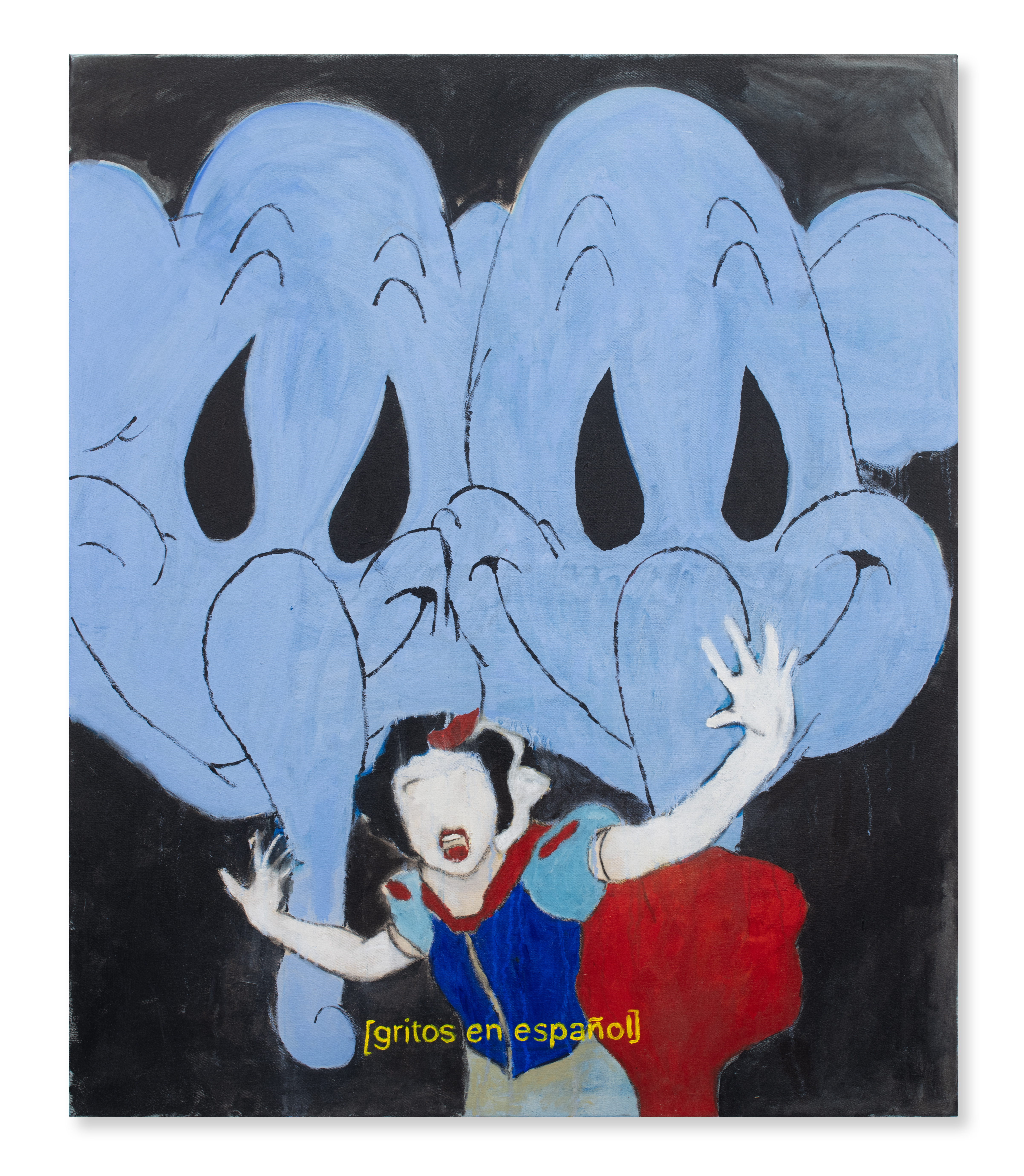
Tears for Queers (2024)
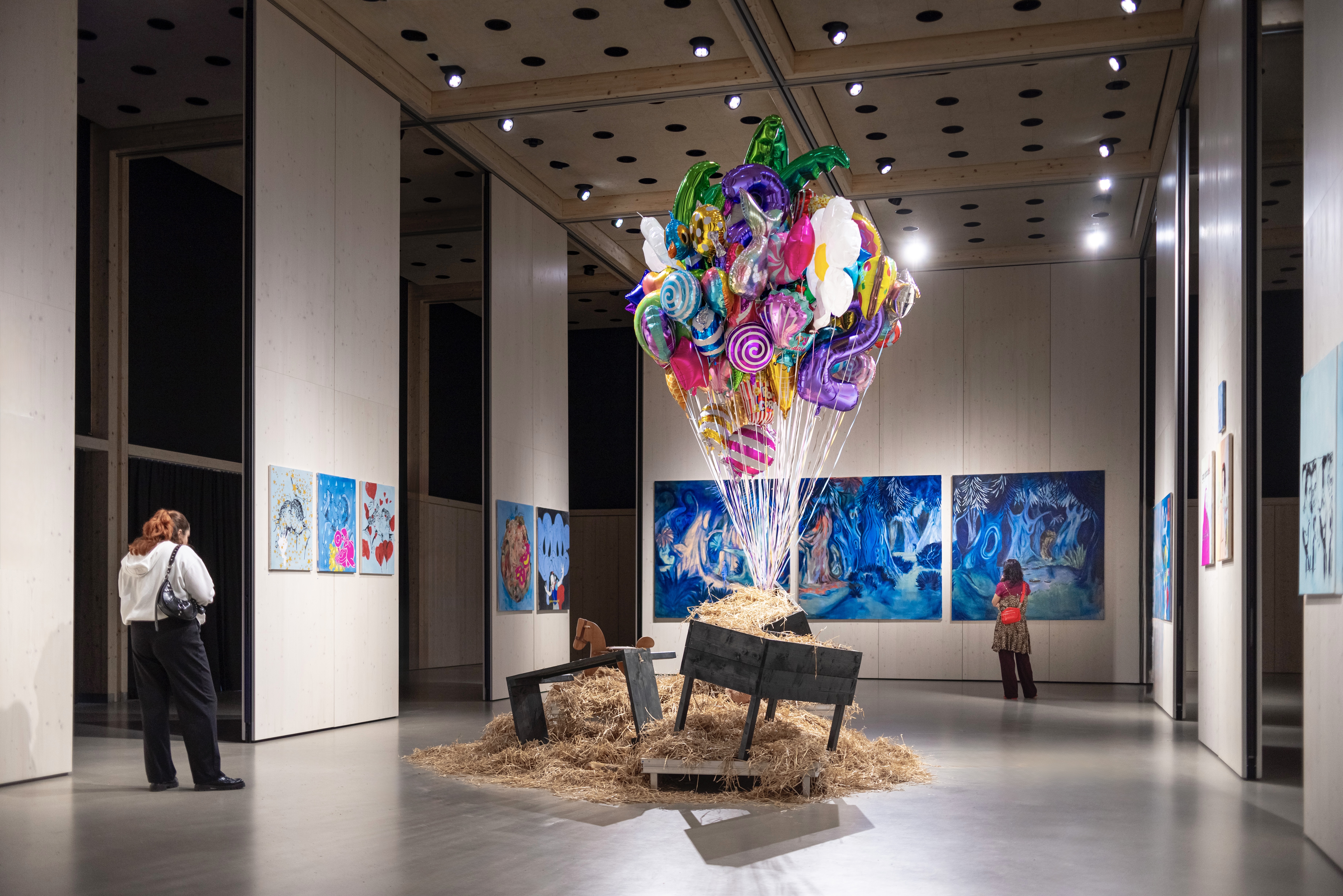
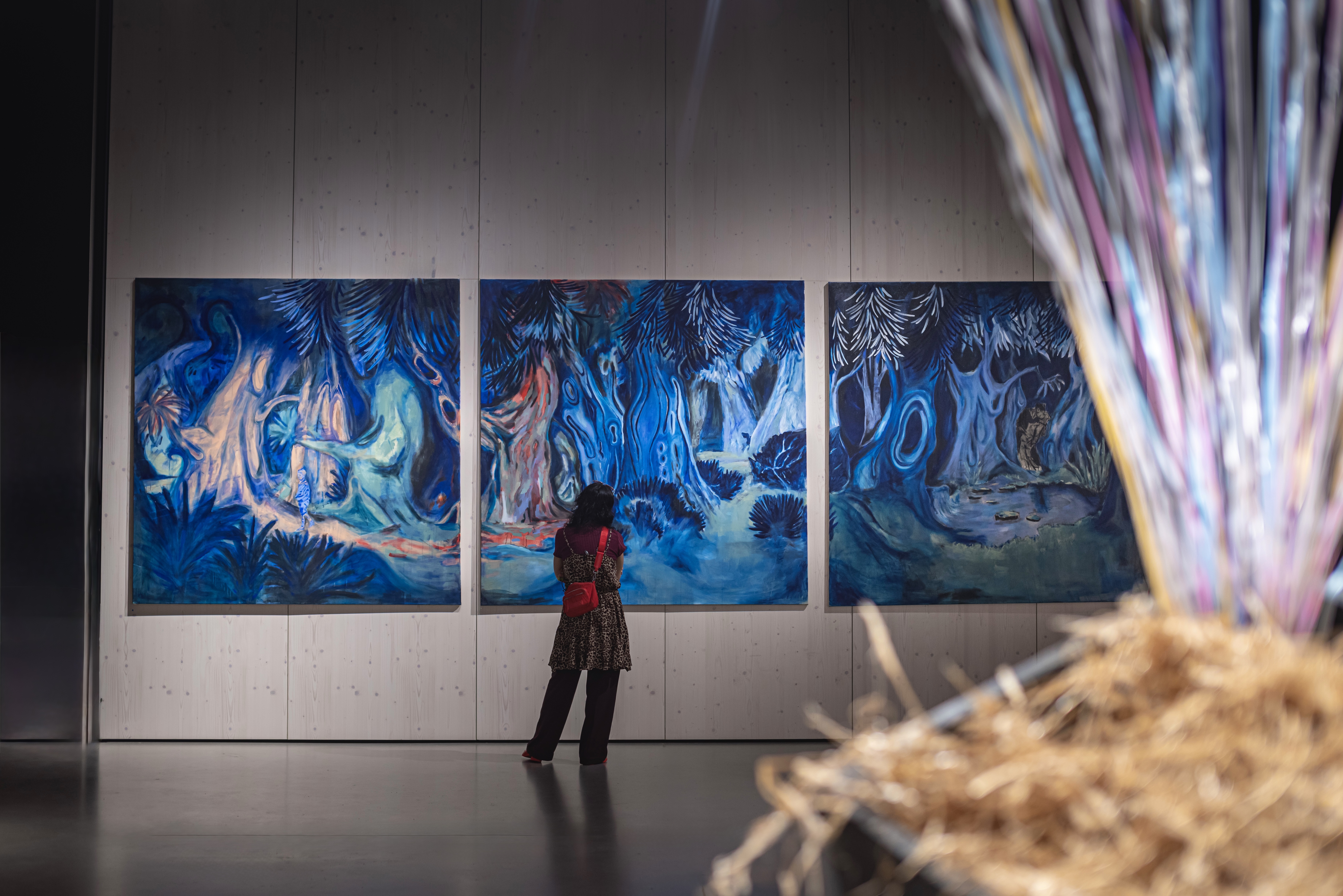
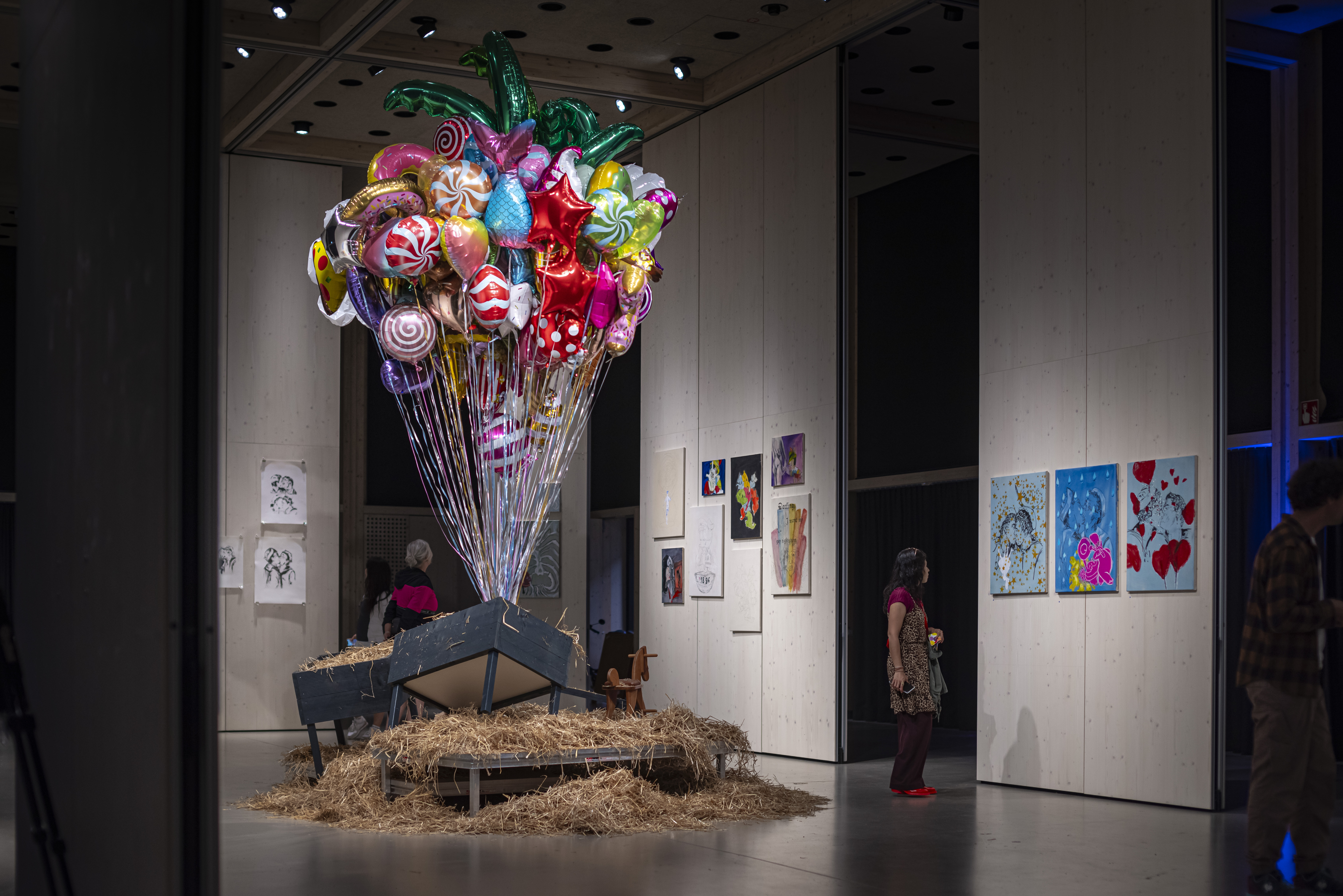
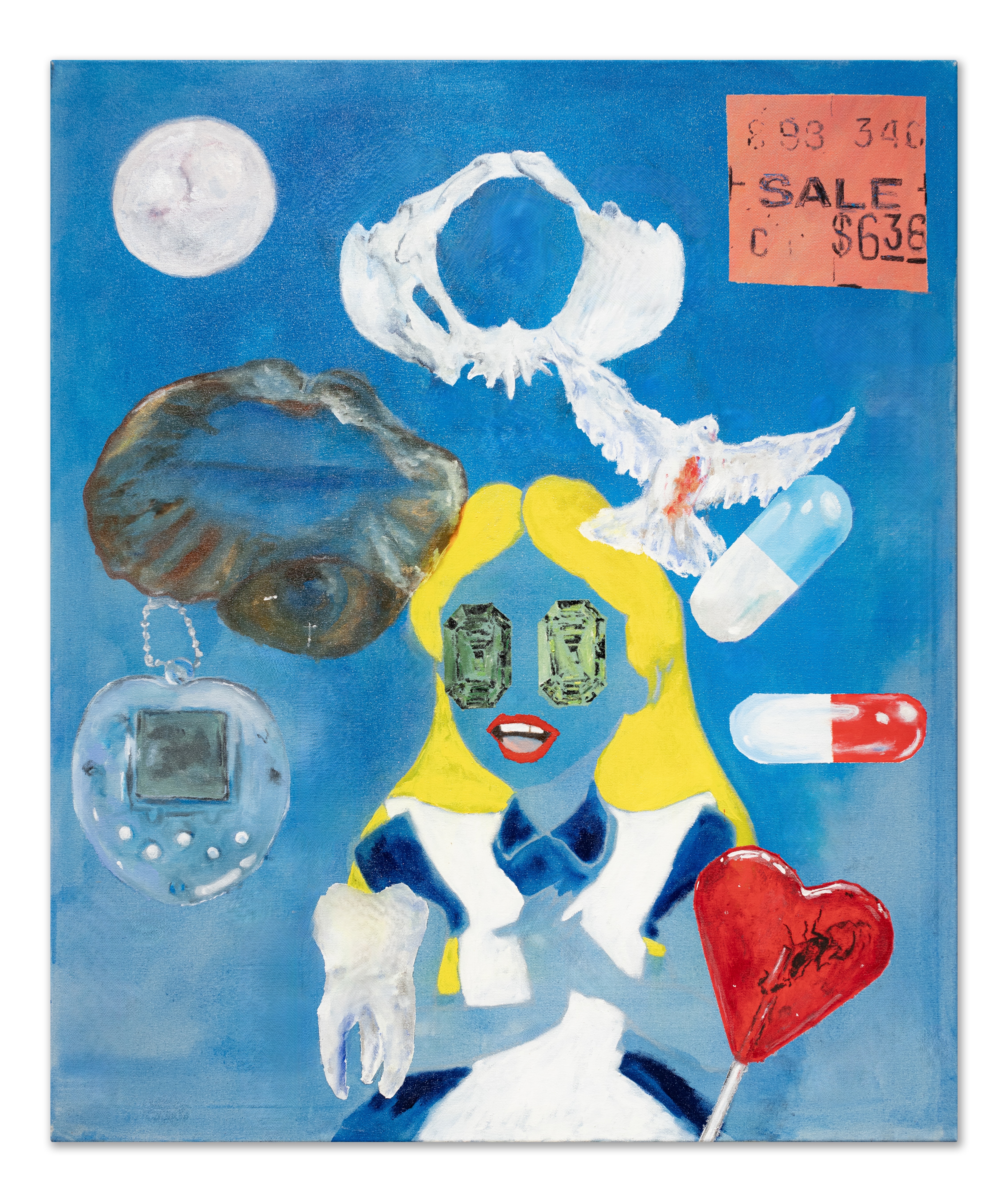
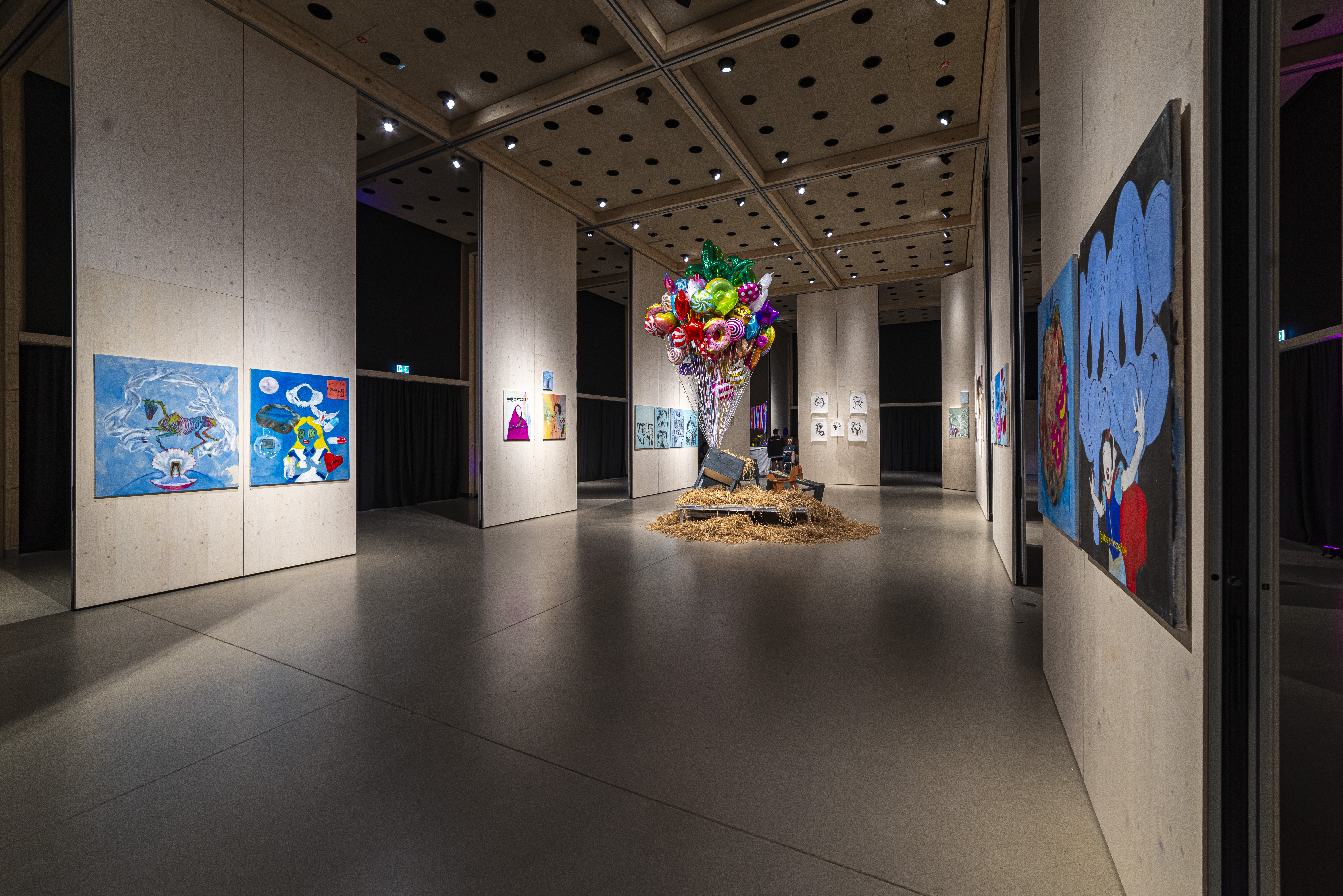
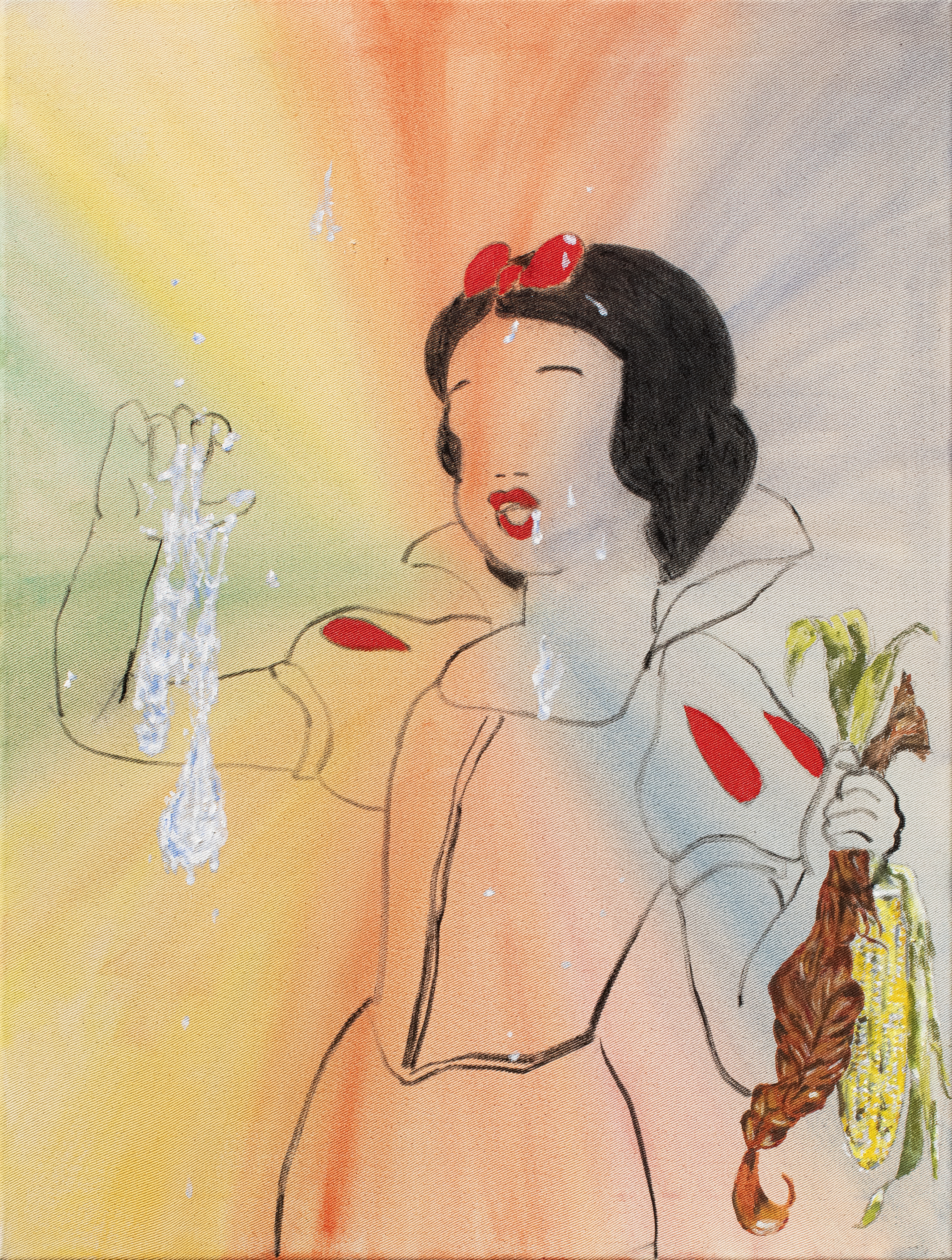
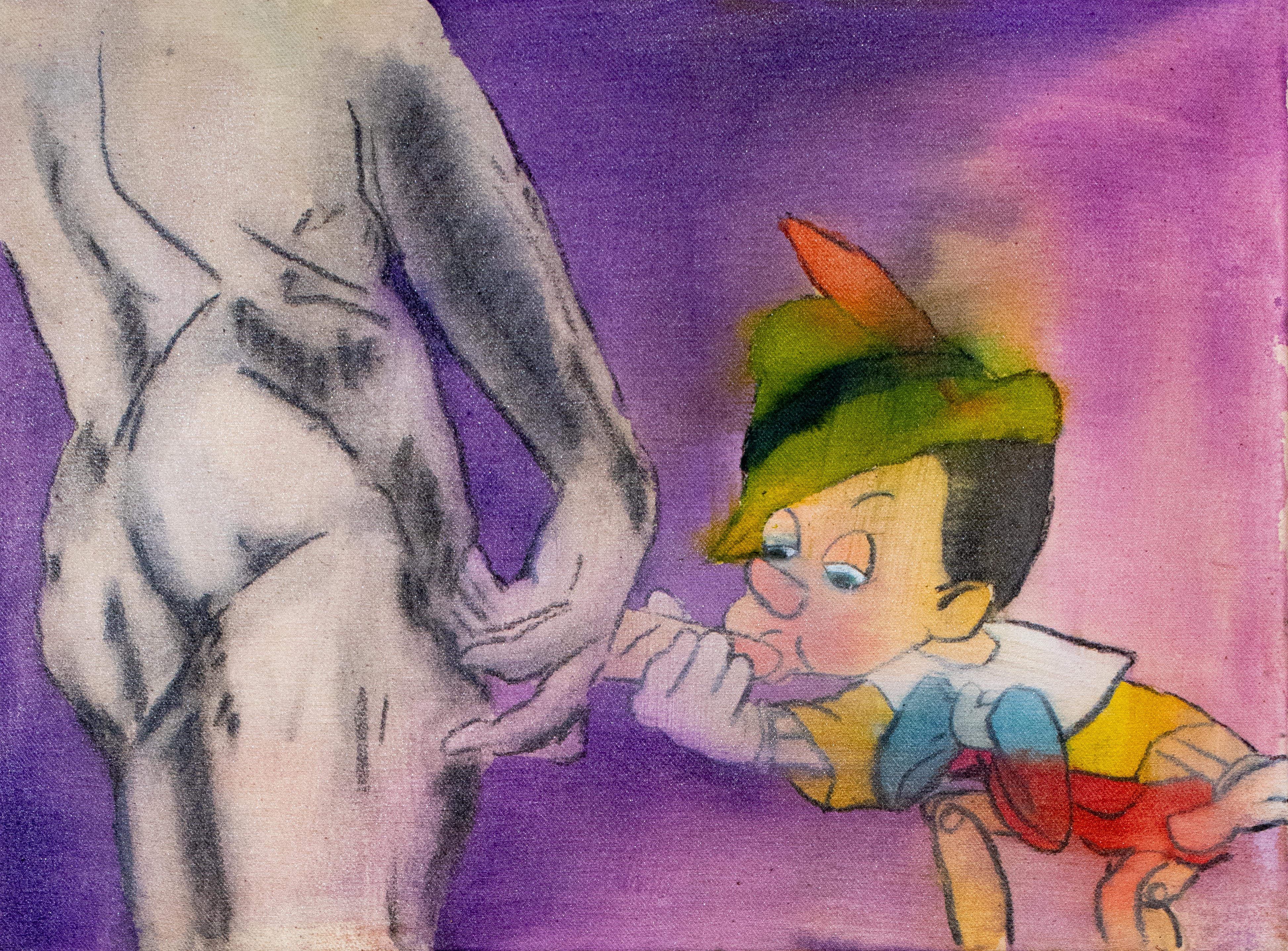
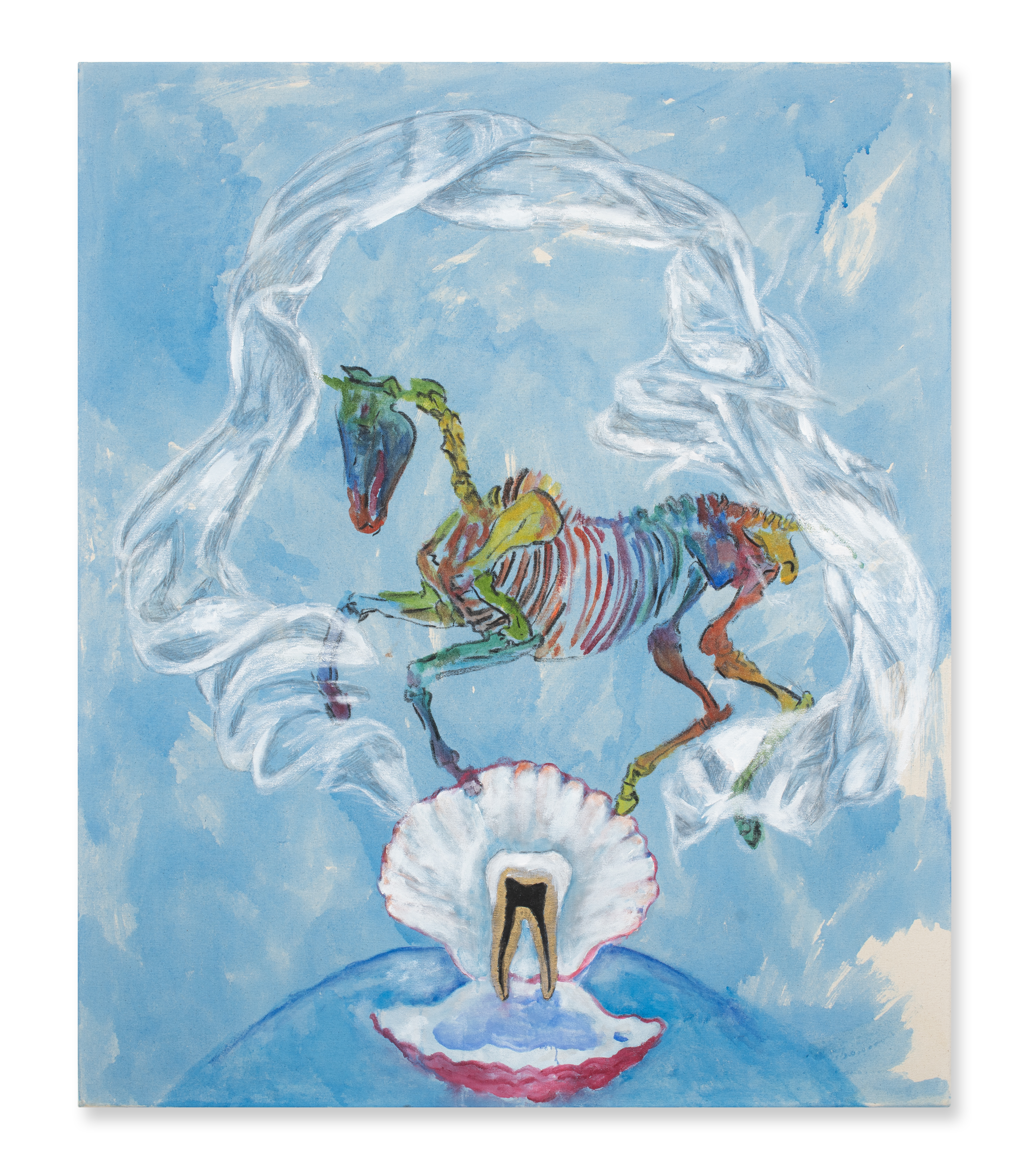
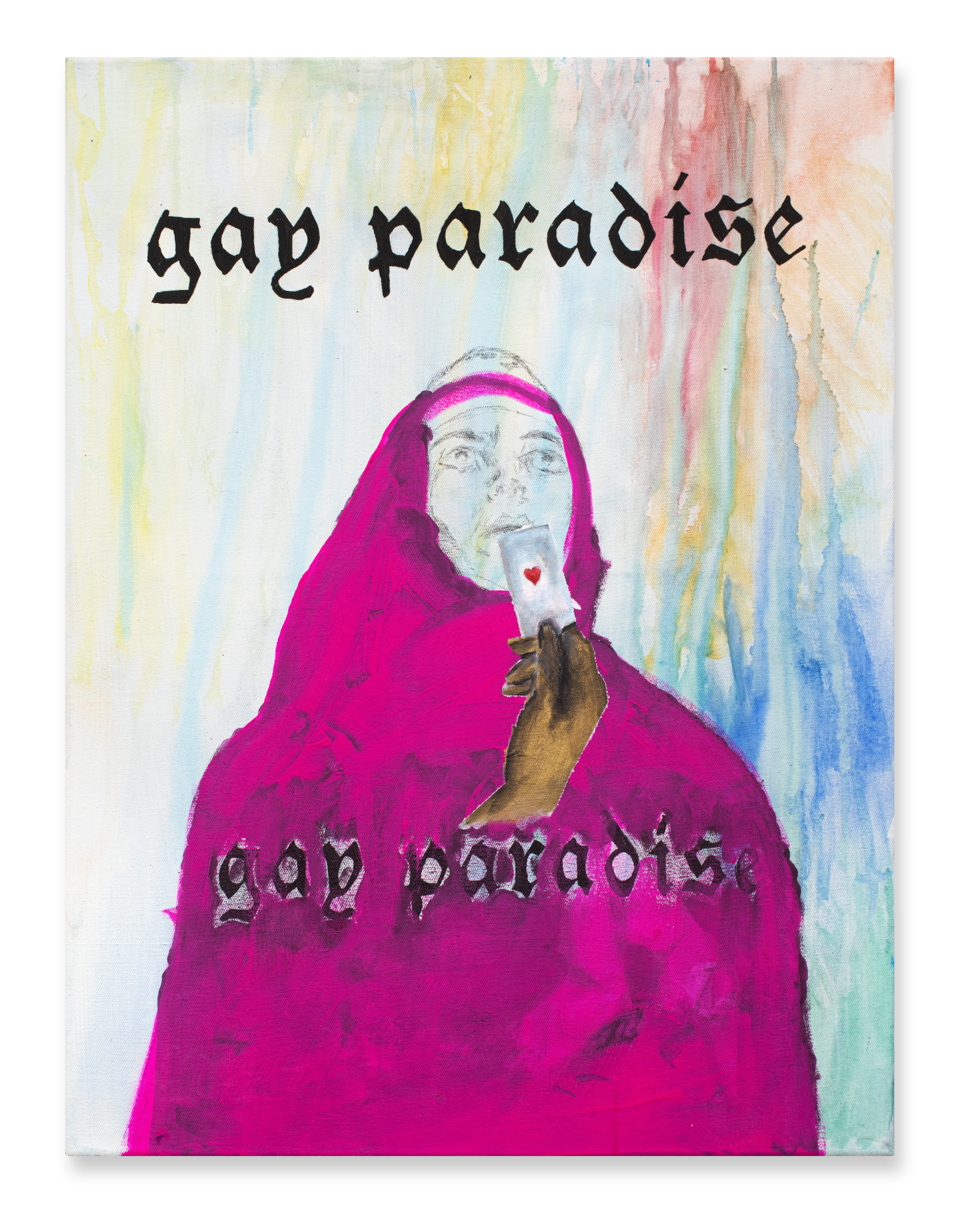
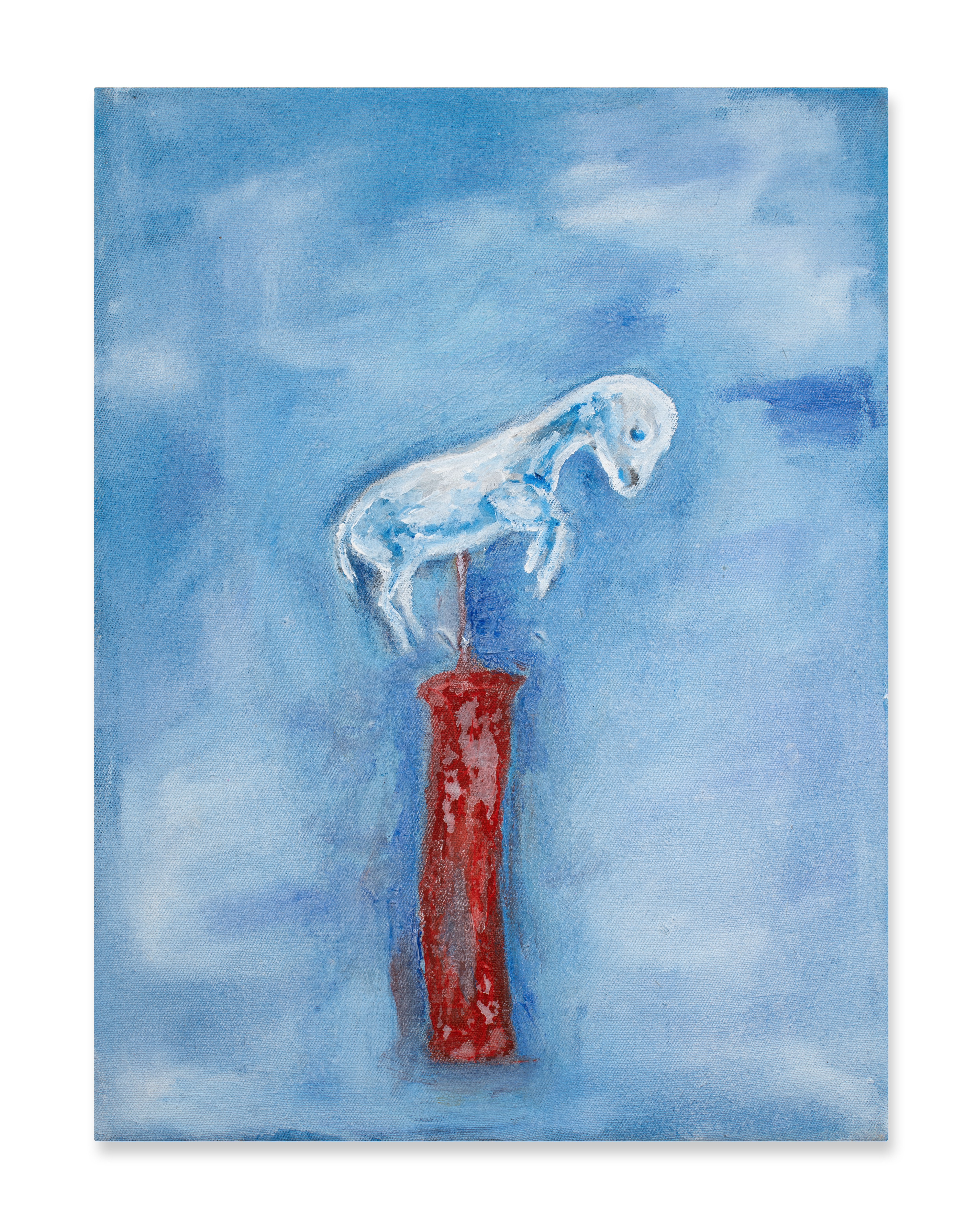
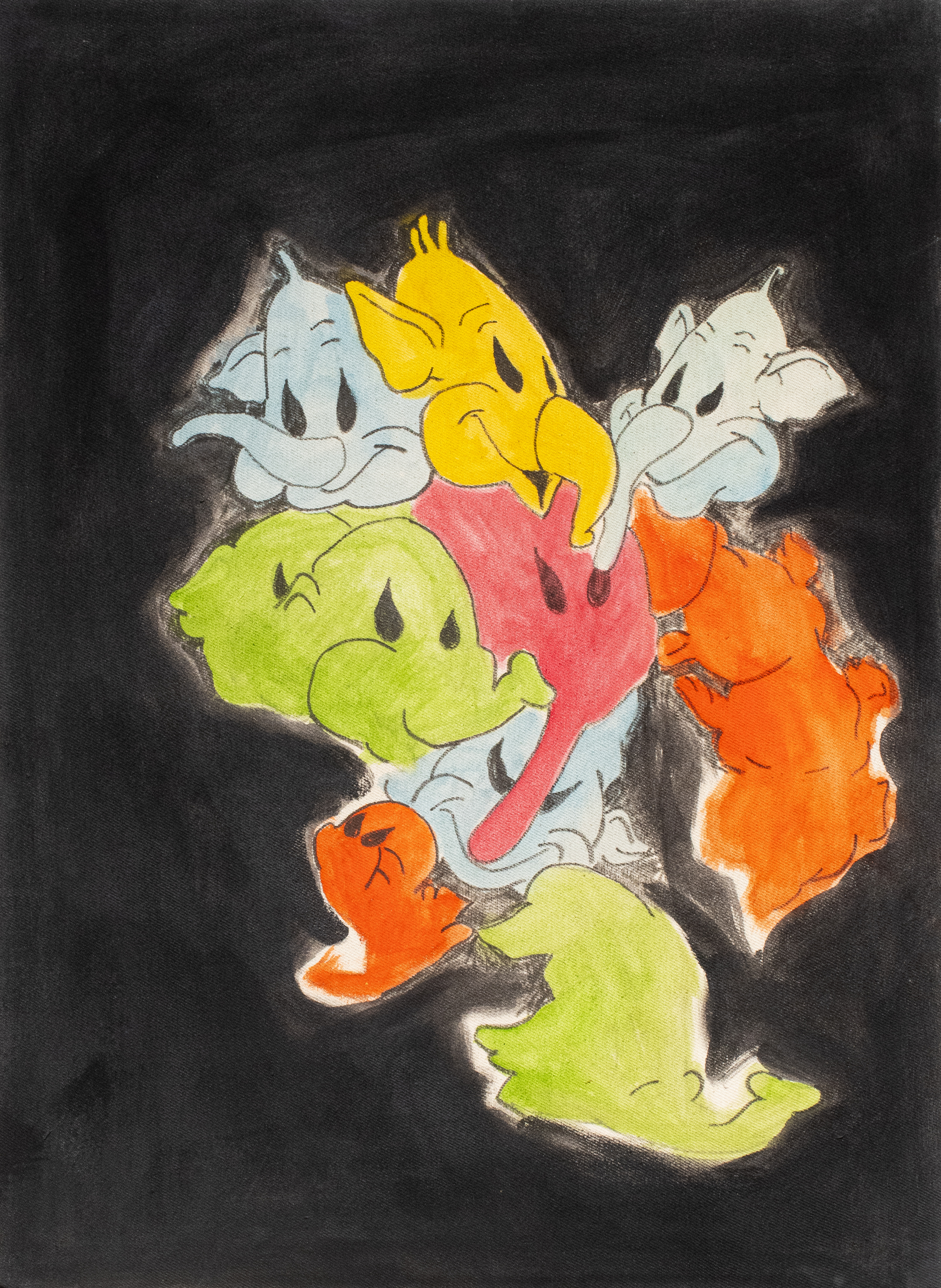
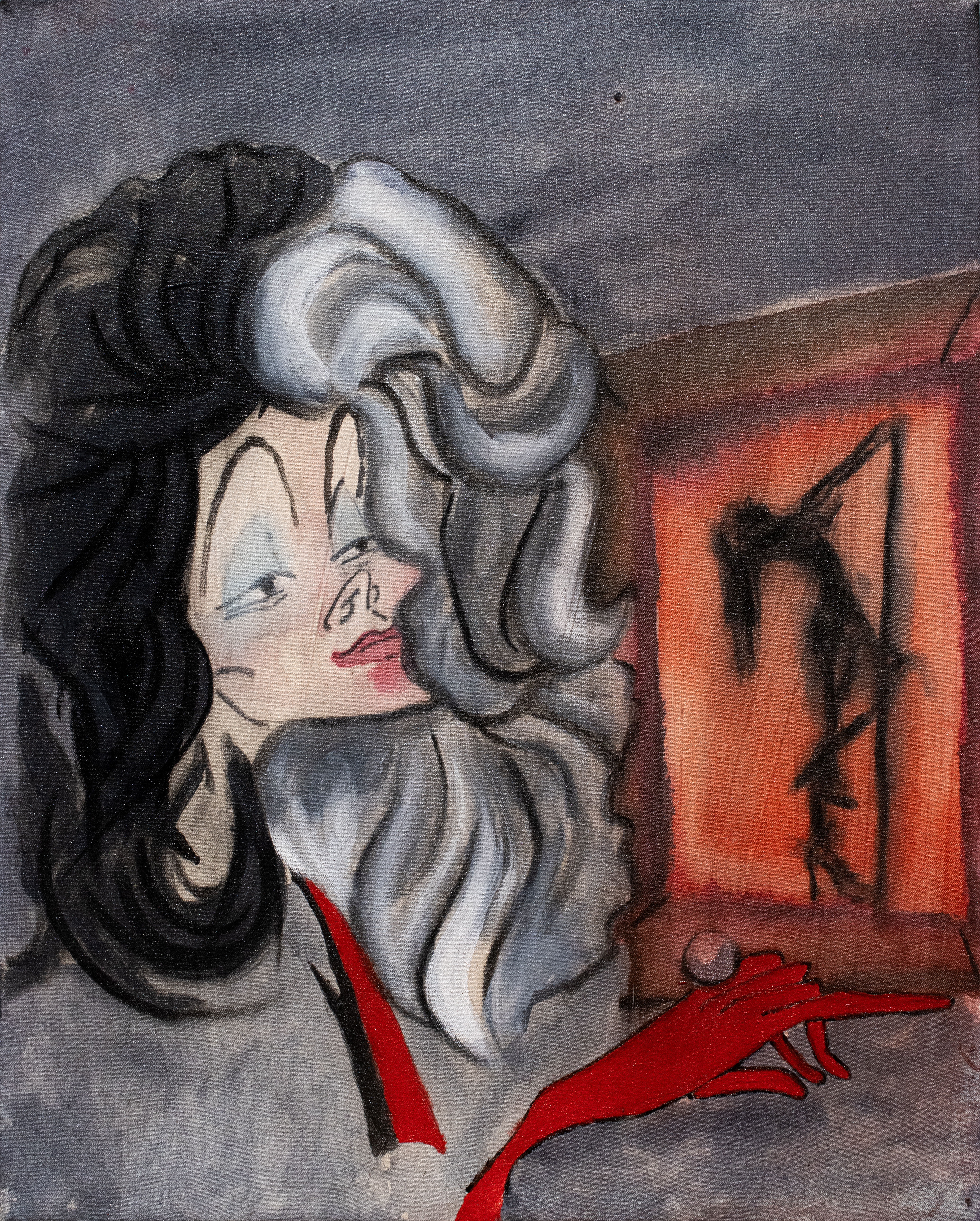
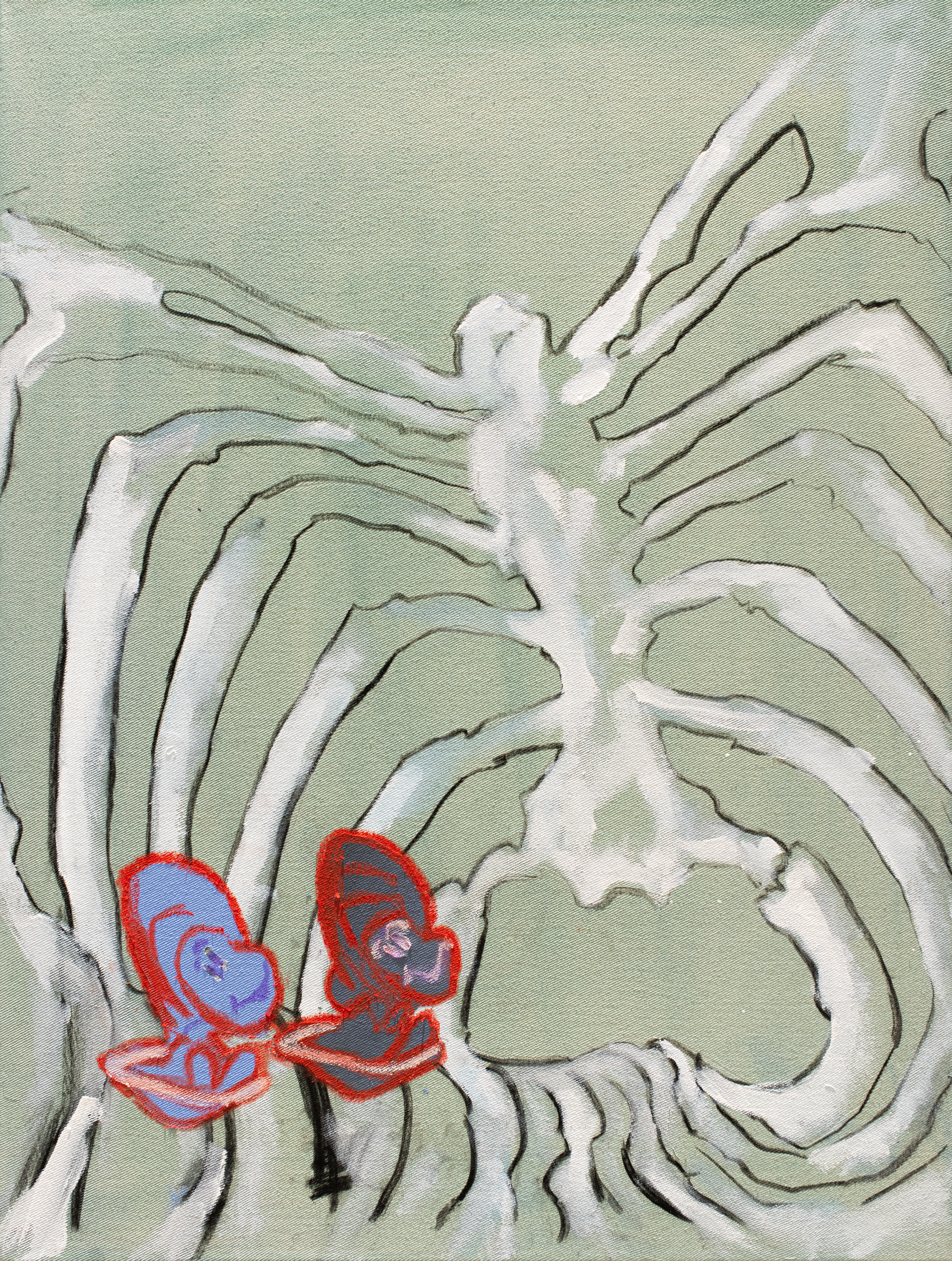
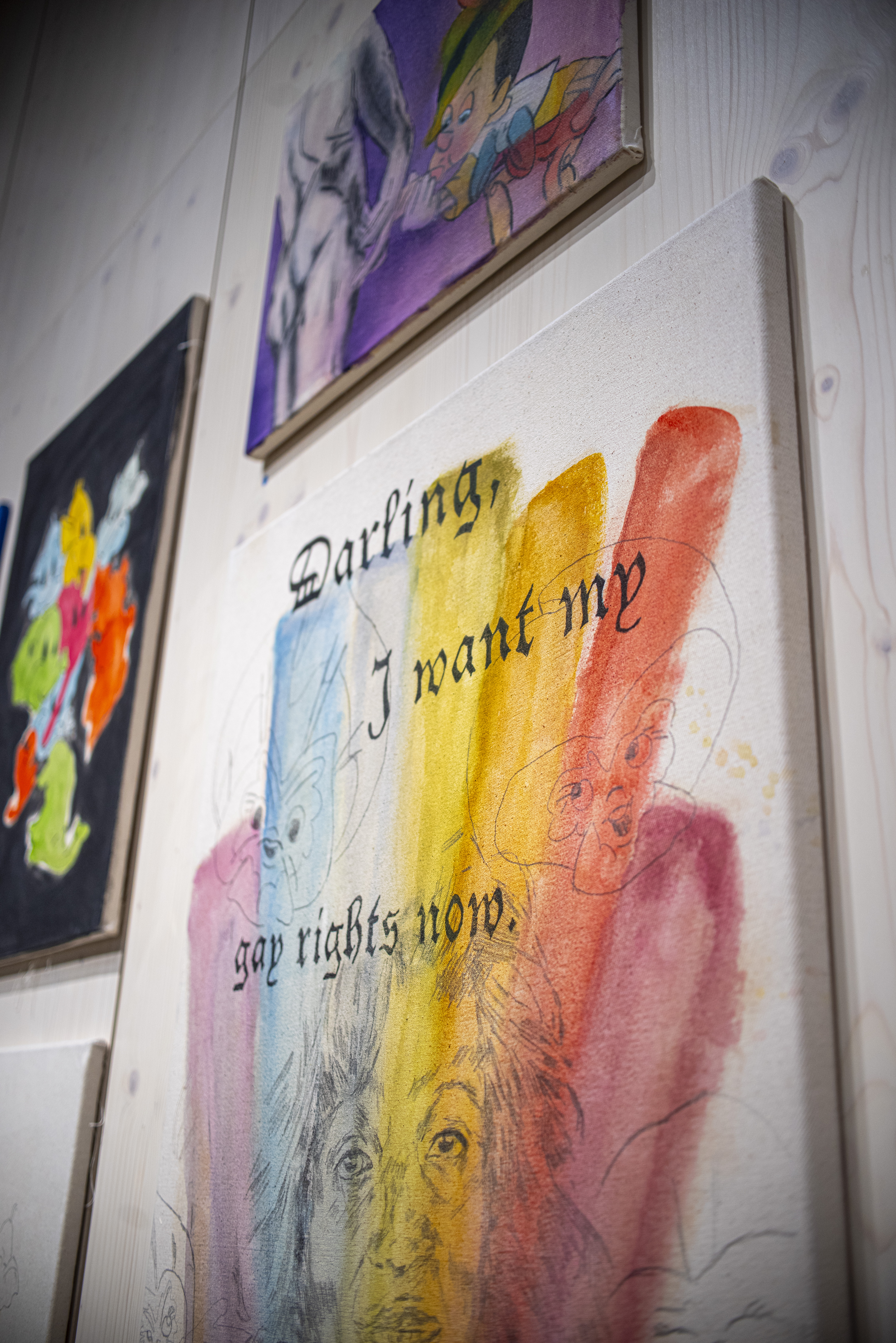
Tears for Queers was a solo exhibition at the Ausstellungshalle Kassel, bringing together 32 paintings and a large-scale installation. The exhibition examines how children's media, popular culture, and early visual experiences shape ideas of identity, desire, and belonging long before they can be questioned.
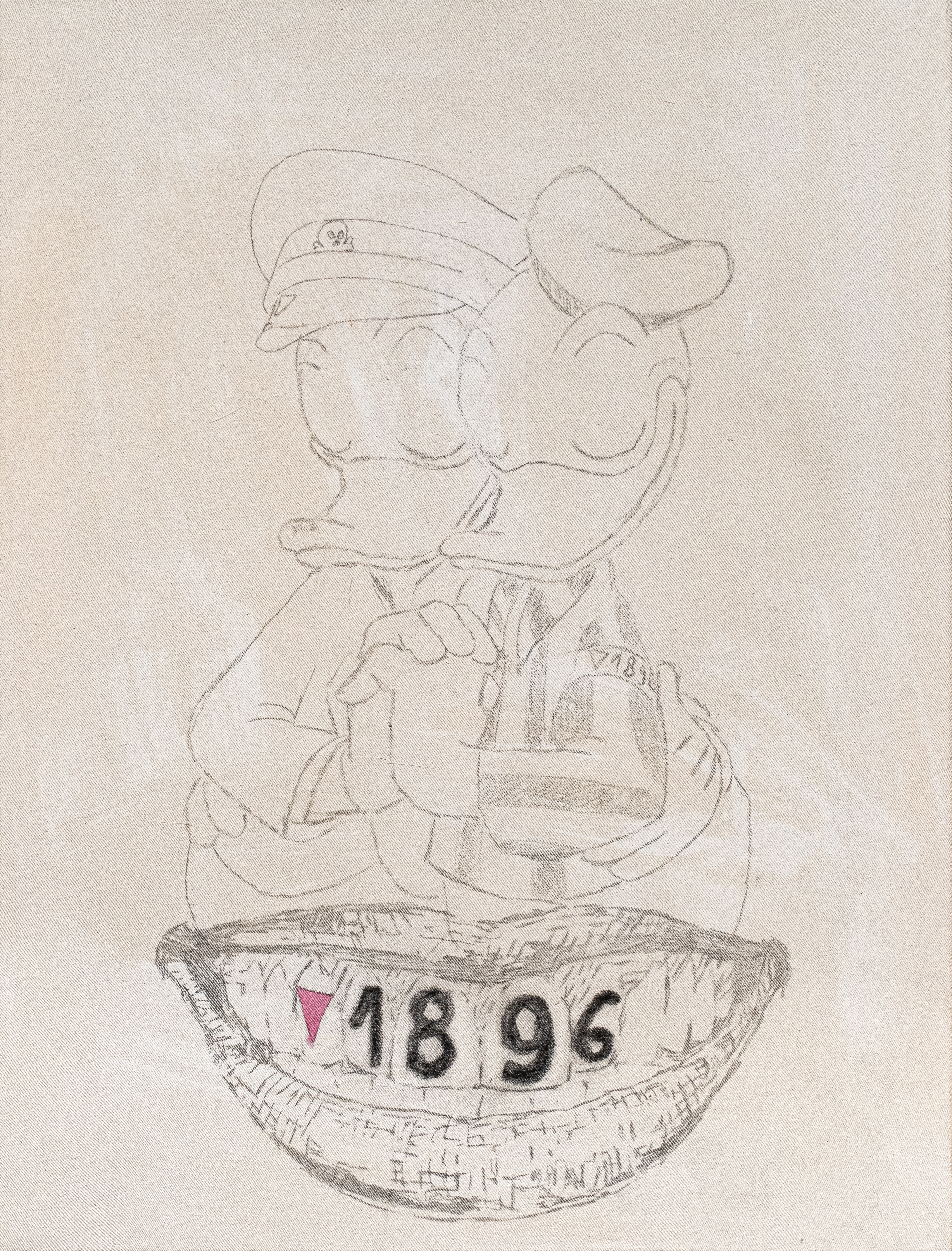
Drawing on comic aesthetics and familiar childhood imagery, the works intertwine playful visual languages with queer histories. References to cruising, the Stonewall Riots, and some of the earliest literary testimonies by imprisoned queer men from Nazi concentration camps reveal how overlooked histories can exist beneath seemingly innocent images. Throughout the exhibition, childhood becomes a site where social norms are first learned—and where they can also be unlearned.
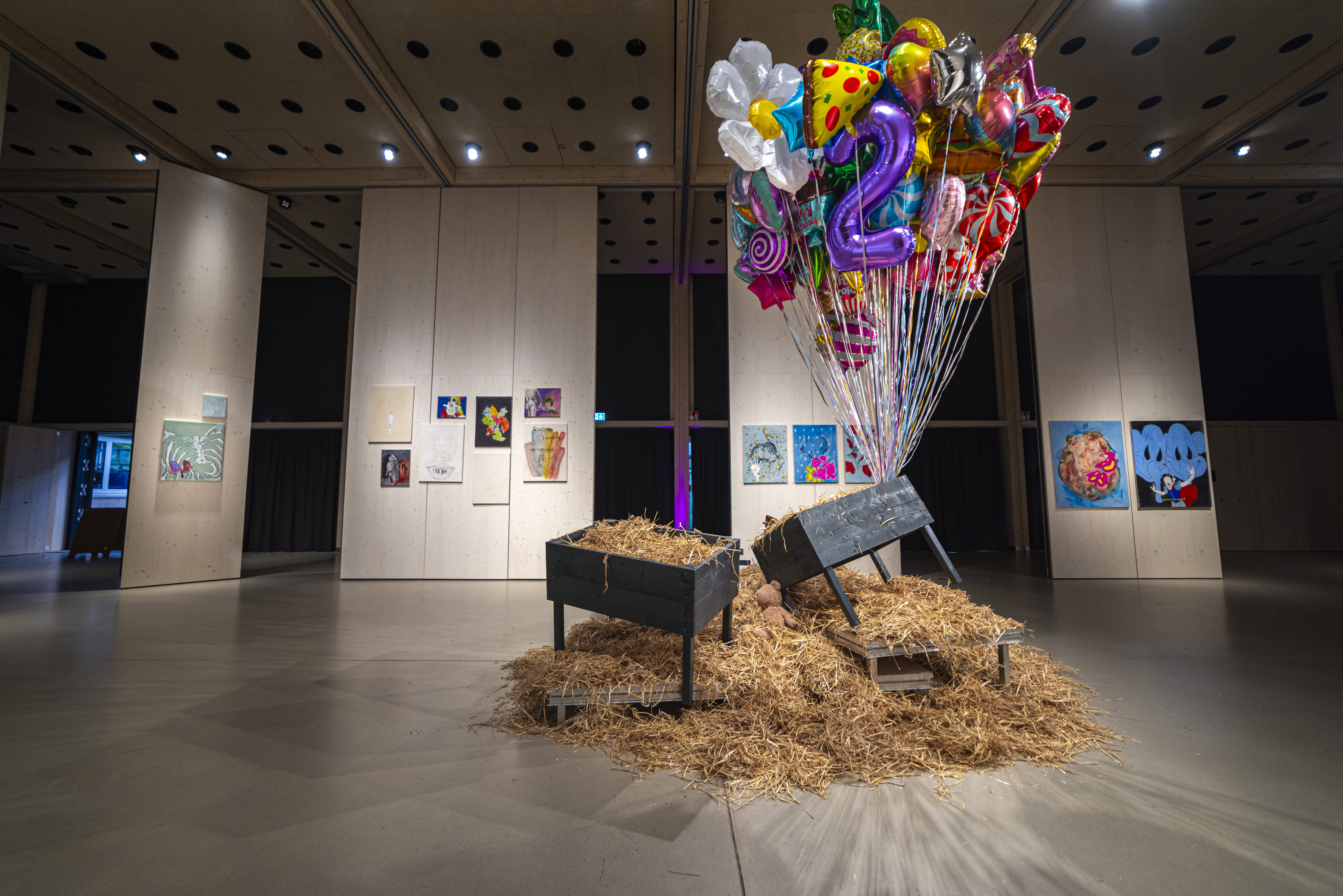
At the center of the exhibition, a room-sized installation transformed the exhibition hall into an unsettling landscape of memory. Black children's beds resembling coffins stood beneath 360 helium balloons, accompanied by a rocking horse and a cattle bone. While these objects initially evoke nostalgia, they gradually reveal themes of vulnerability, mortality, and exclusion. The cattle bone introduces a physical presence of death, confronting viewers with the question of how many queer lives might never have had the chance to experience childhood at all.
The exhibition was informed by testimonies from parents who rejected or wished harm upon their queer children. These accounts gave rise to the speculative premise that later evolved into Father's Death Wish: What if queerness could be detected before birth, similar to prenatal screening? Rather than proposing an answer, the work exposes the violence embedded in such a question and reflects on the conditions under which queer lives are accepted, erased, or denied.
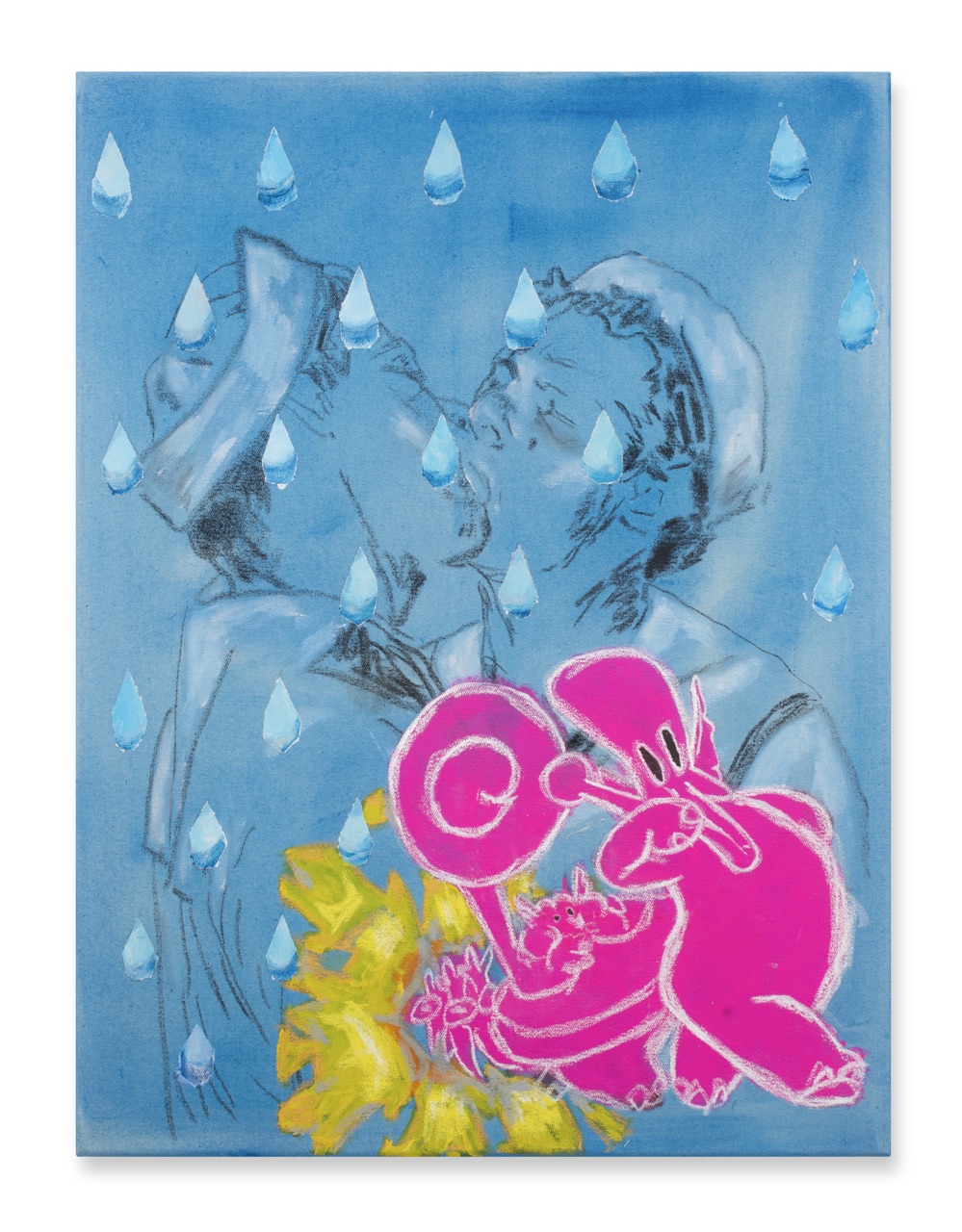
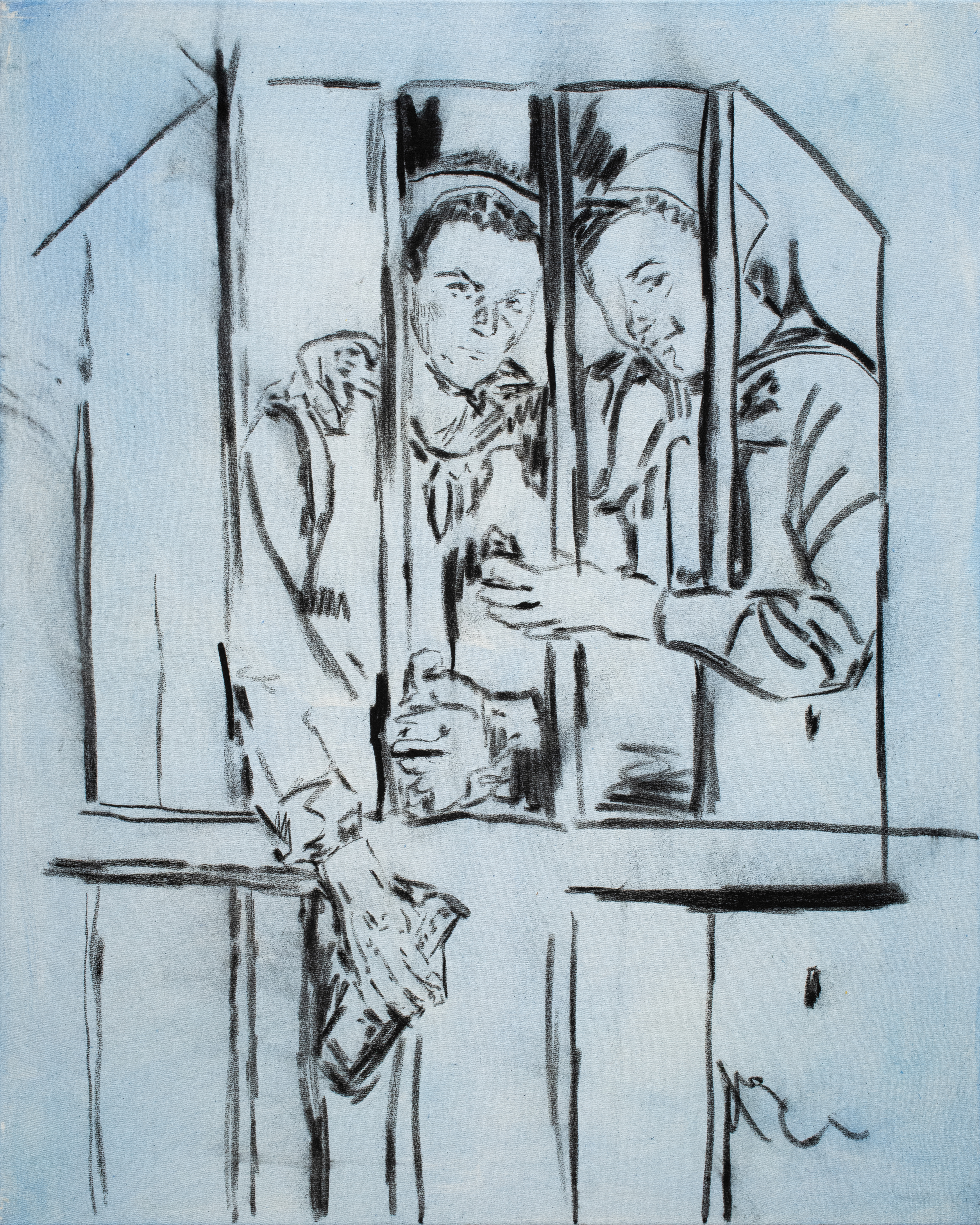
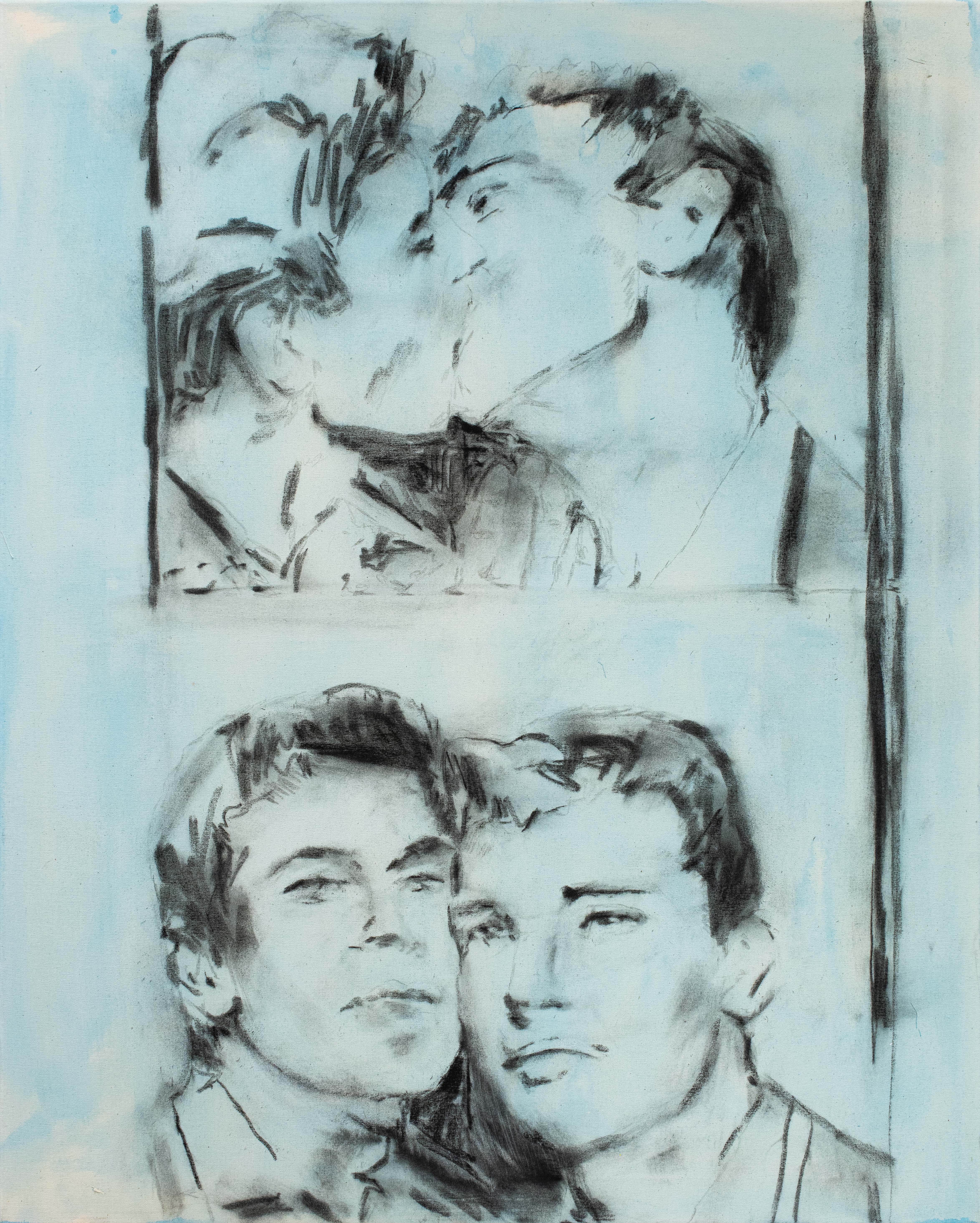
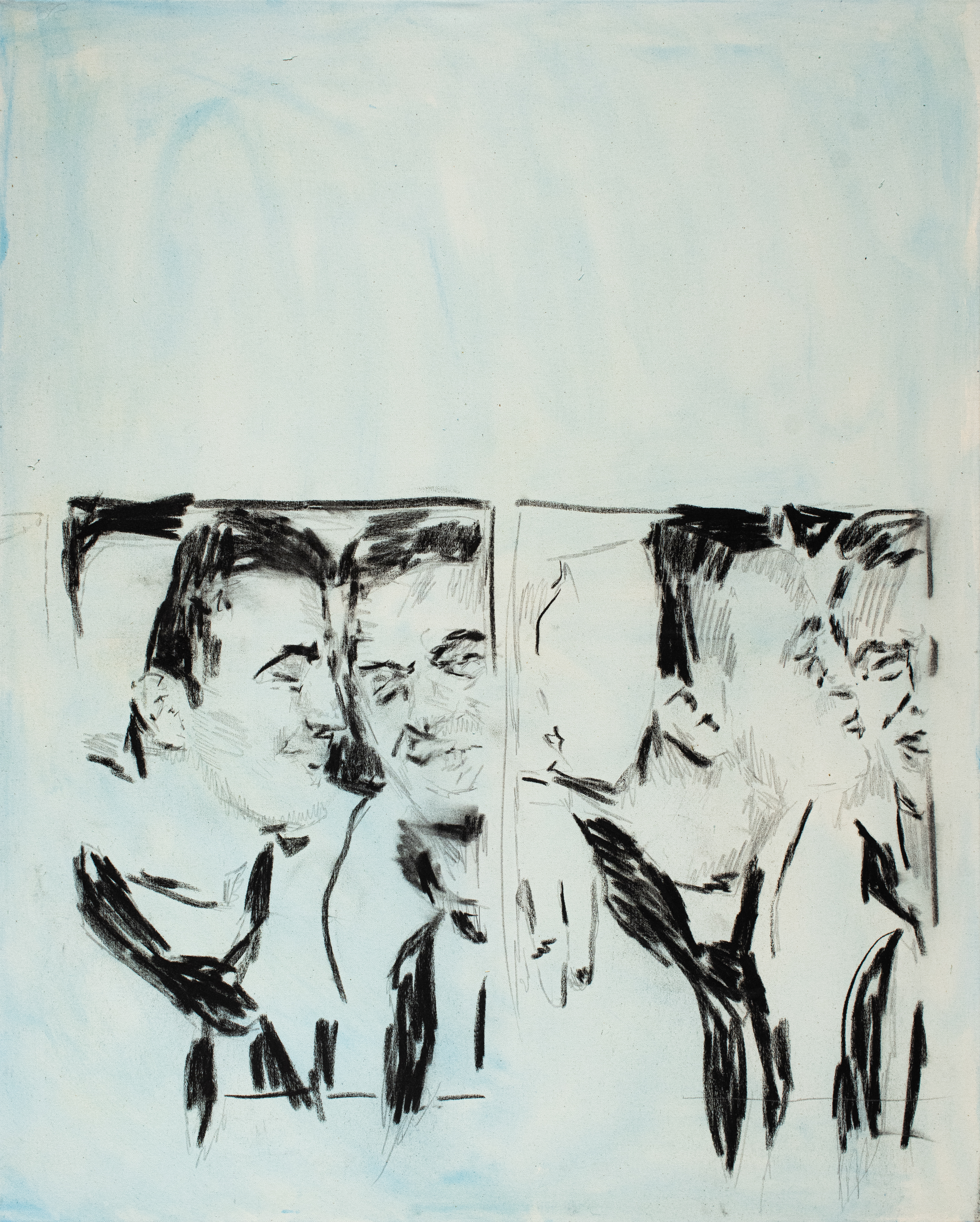
A recurring series of charcoal drawings and lithographs depicts pairs of sailors from the Second World War embracing and kissing. Through repetition, these images function almost like a visual mantra, reclaiming gestures of intimacy that were historically criminalized and largely erased from public memory.
Across the exhibition, iconic figures from Disney and comic culture are deliberately reimagined. Snow White, Dumbo, and other symbols of an idealized childhood are placed in unexpected, sometimes unsettling contexts. By disrupting these familiar narratives, Tears for Queers questions how popular media constructs gender roles, desire, and ideas of normality, revealing that even our earliest fantasies are never ideologically neutral.